03 / 2024
Rapid
Autografting
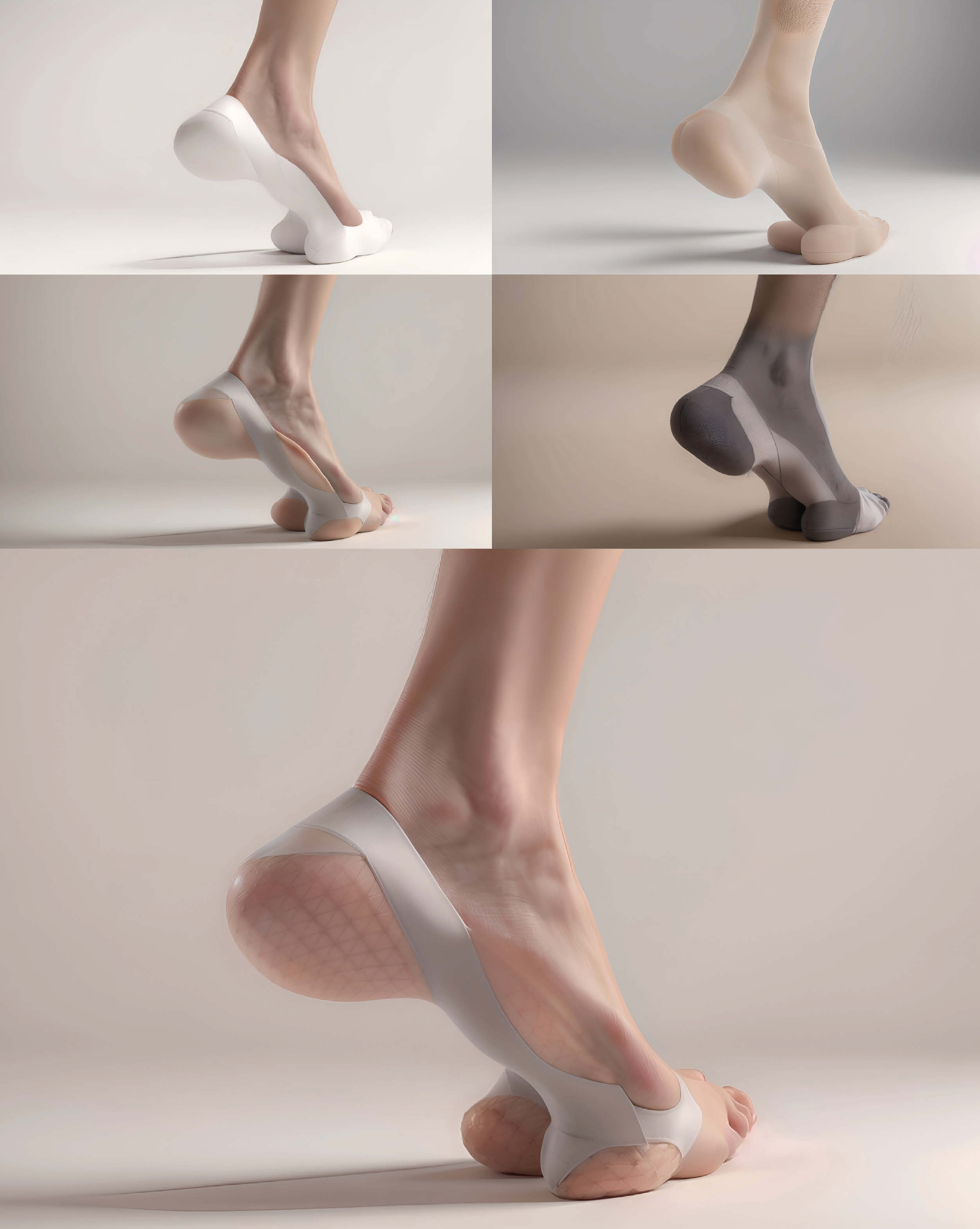
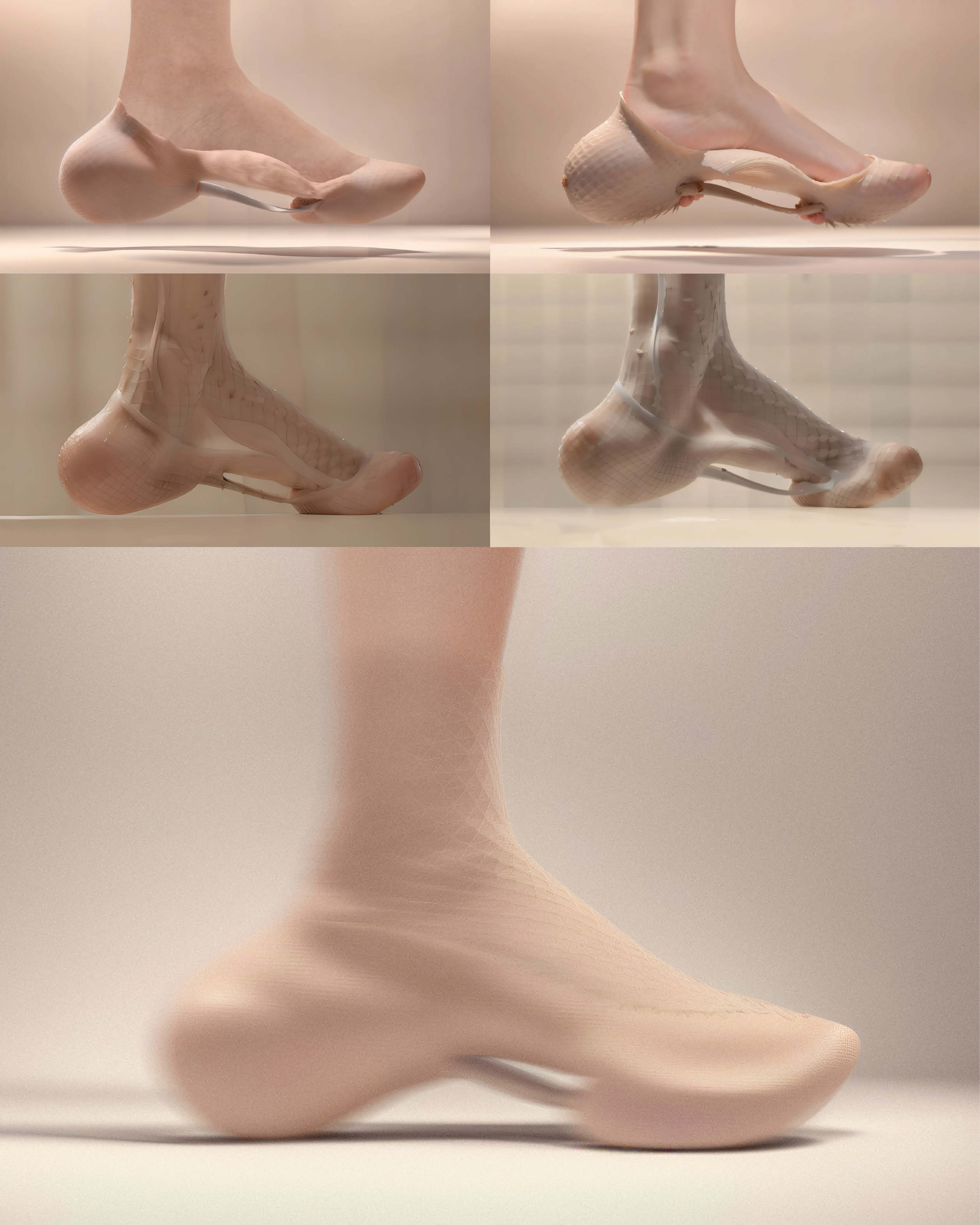
Footwear designed for long-distance running in an anticipated future with advanced biotechnology, where individuals customize their bodies to meet specific needs.
- Year
- 2024
- Context
- Konstfack University of Arts, Crafts and Design. Master thesis, Design ecologies.
- Duration
- Six months
- Practice
- Footwear design, Design research, Design fiction, Concept development, Material exploration, Digital and physical prototyping, Exhibition design
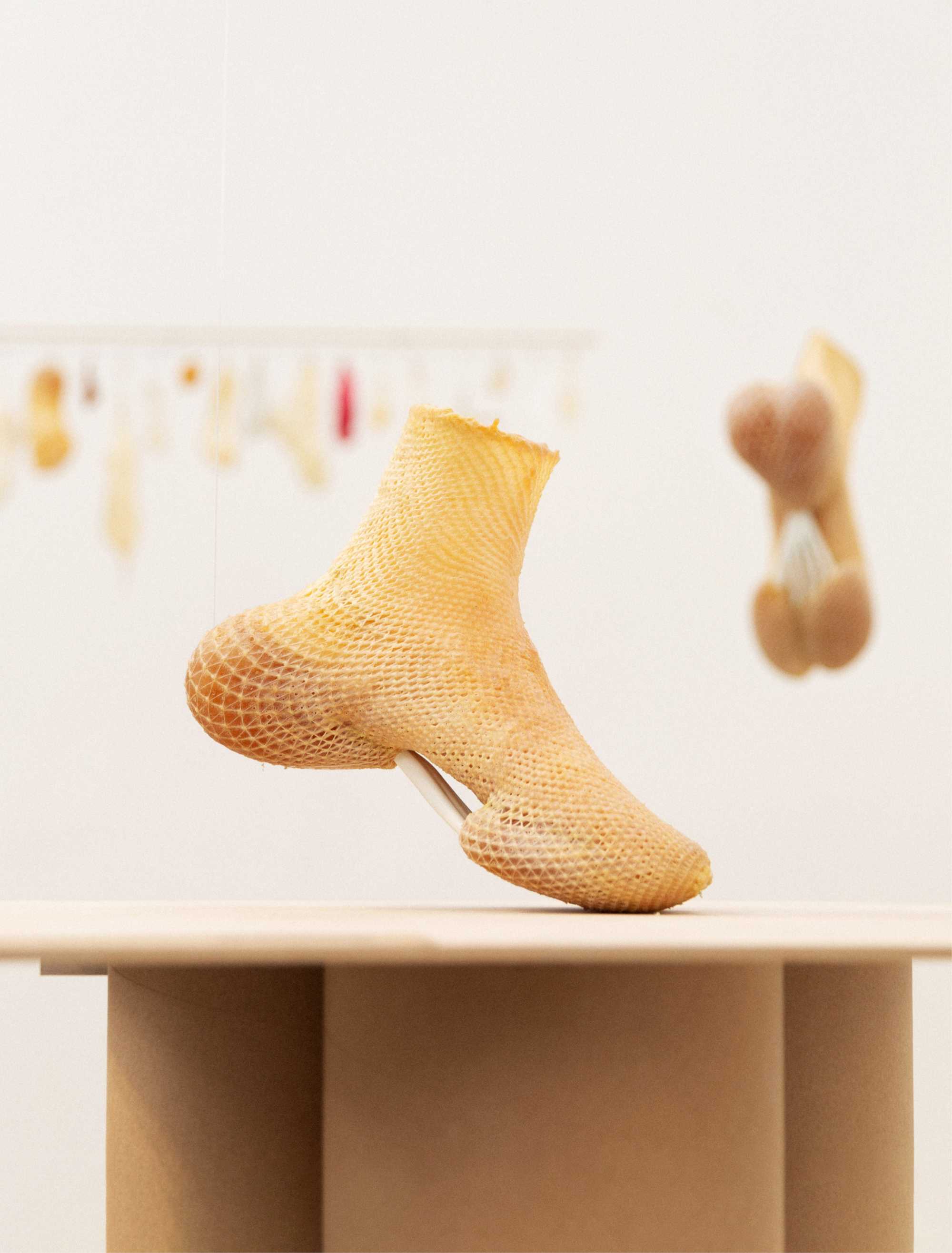
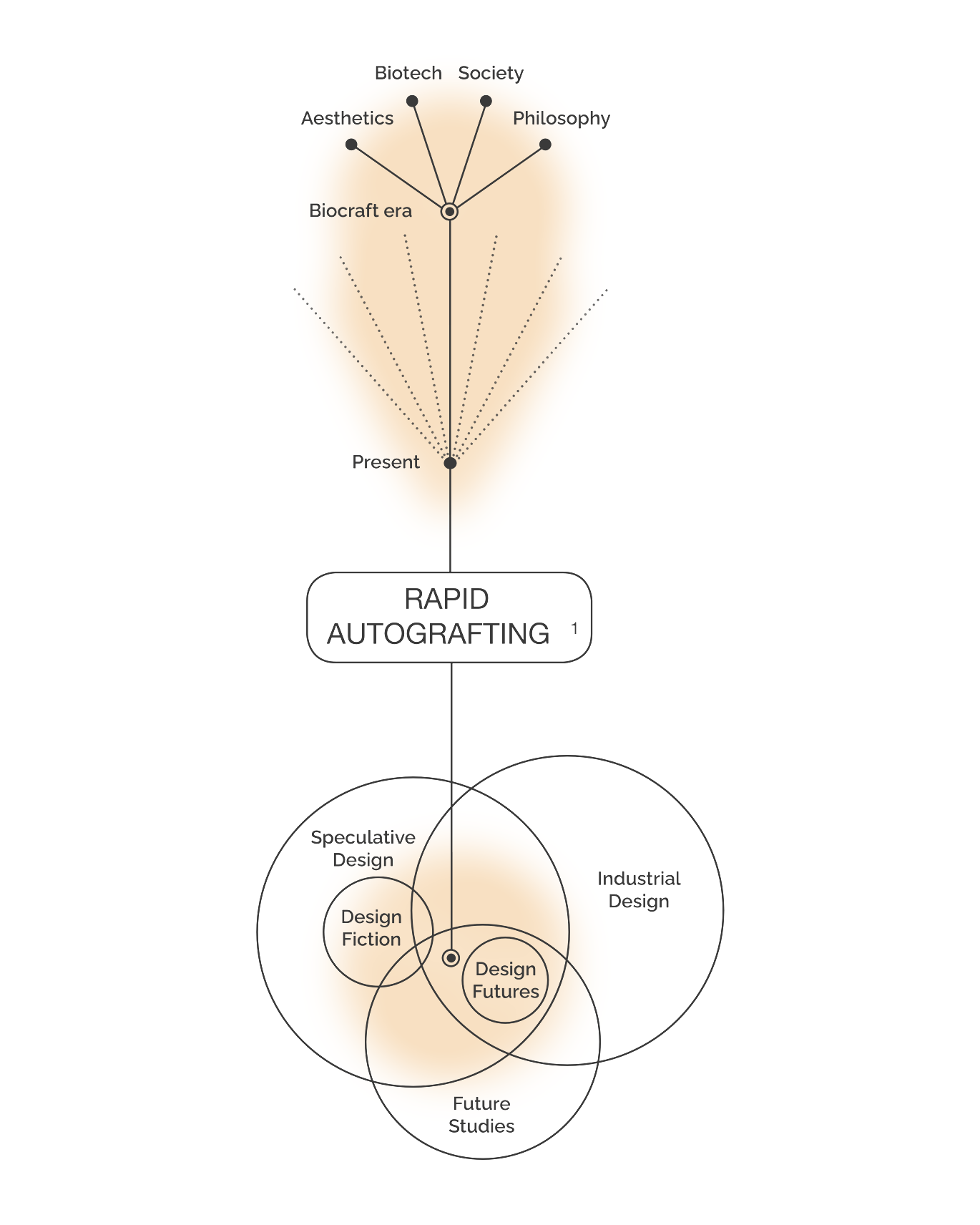
What would biofootwear for running look like? How could we enhance athletic performance with biotechnology? What consequences would it have on the human-tech relation? What are the ethical implications of this practice?
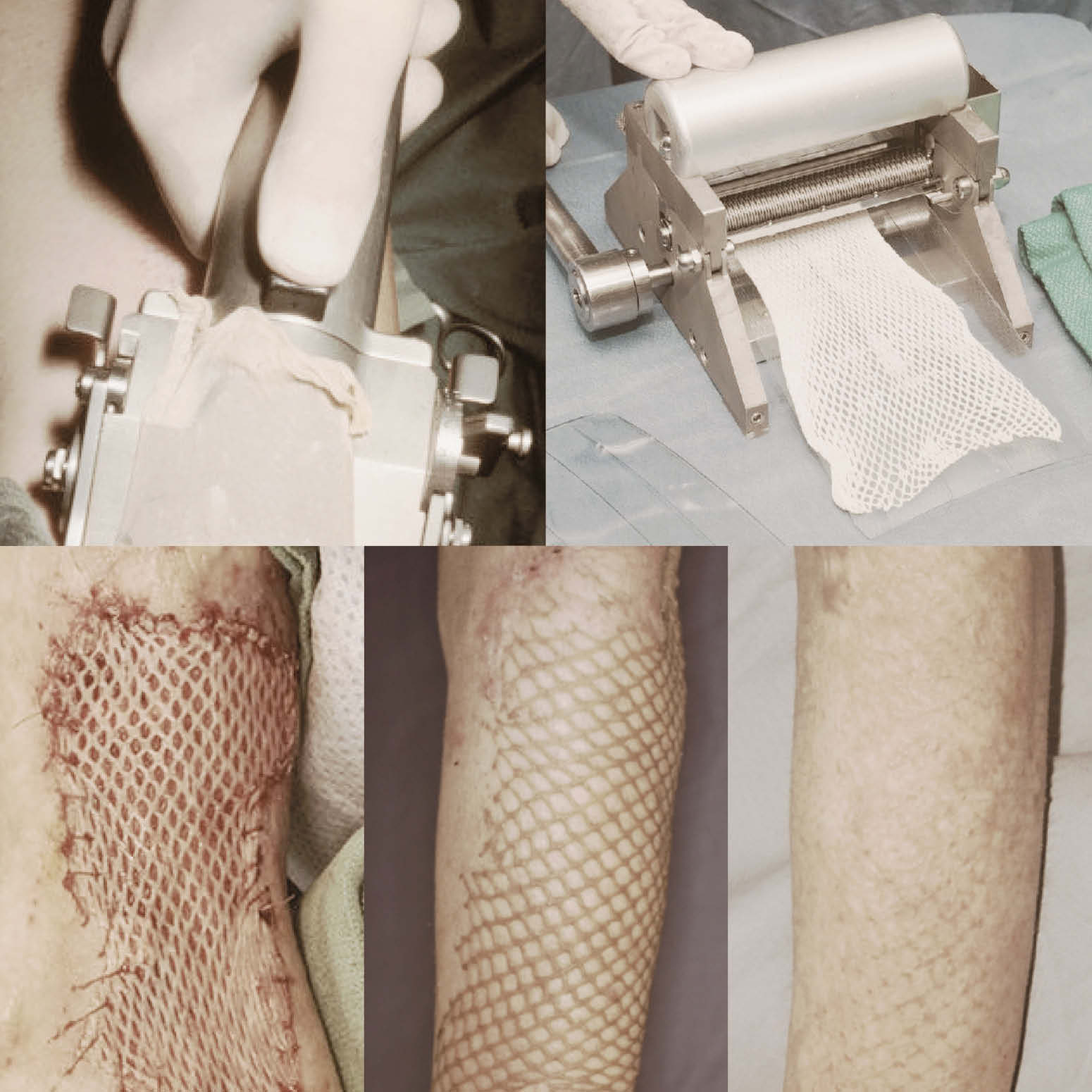
Uses tissue engineering to transfer a person’s own healthy tissue to damaged areas, promoting healing and restoring appearance and function after injury. It is envisioned in this context to create tissue layers that temporarily fuse with the foot structure.
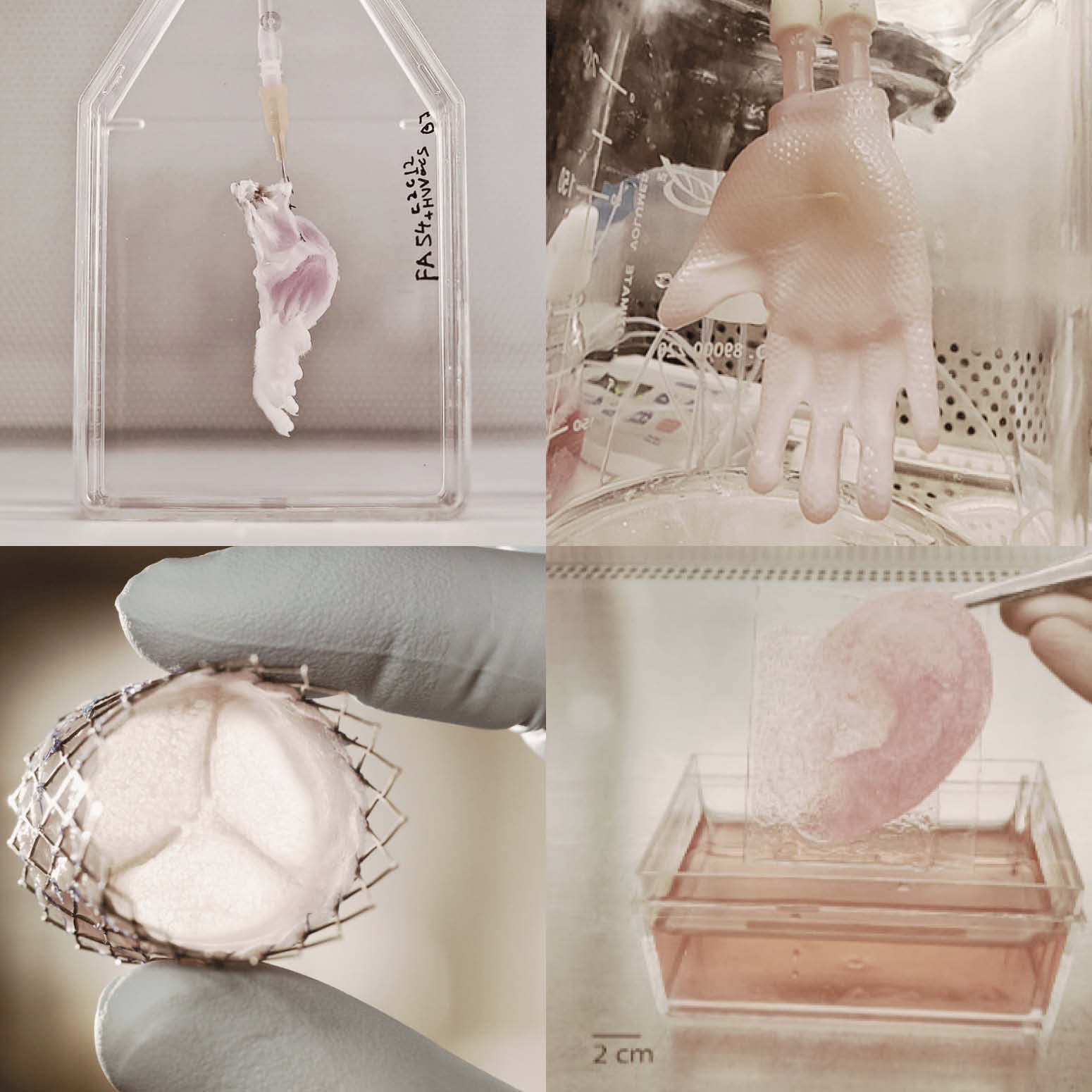
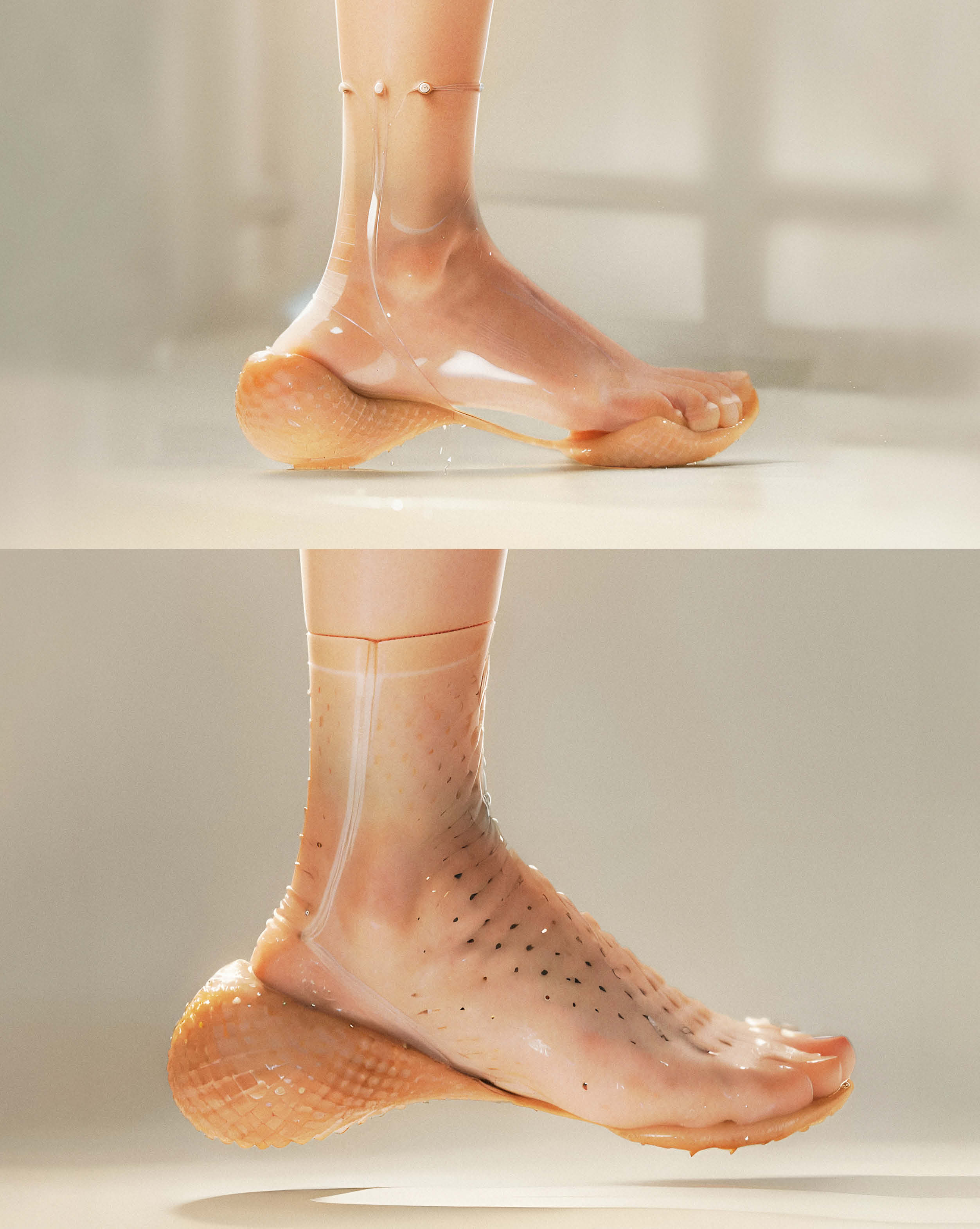
Involves the production of artificial tissue and organs. This includes 4D printing, where the organic materials change shape in response to stimuli. In this context, it is intended for the production of personalized skins that enhance the feet.
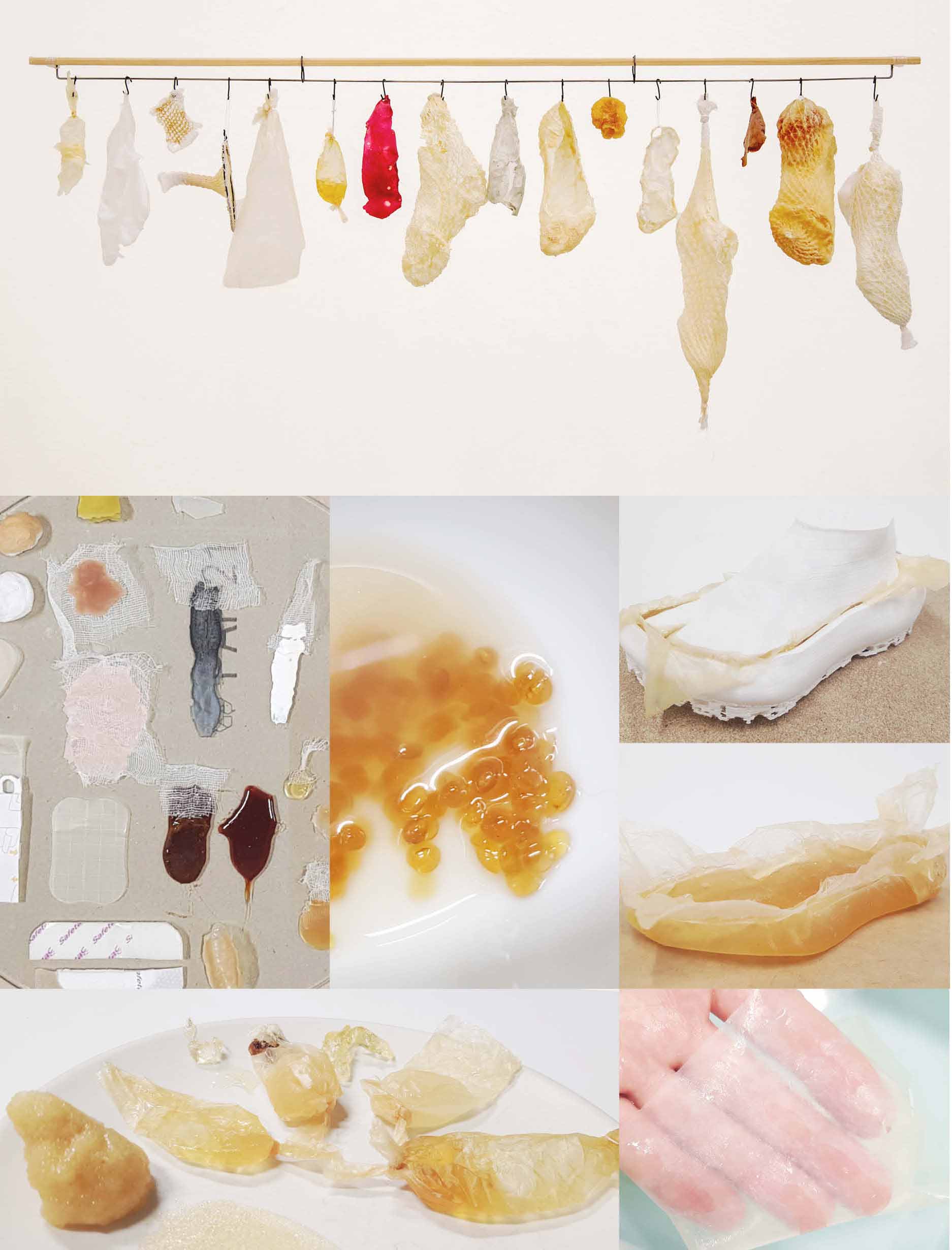
Investigating collagen, keratin, gelatin, and other materials, experimenting with various application methods for optimal customization.
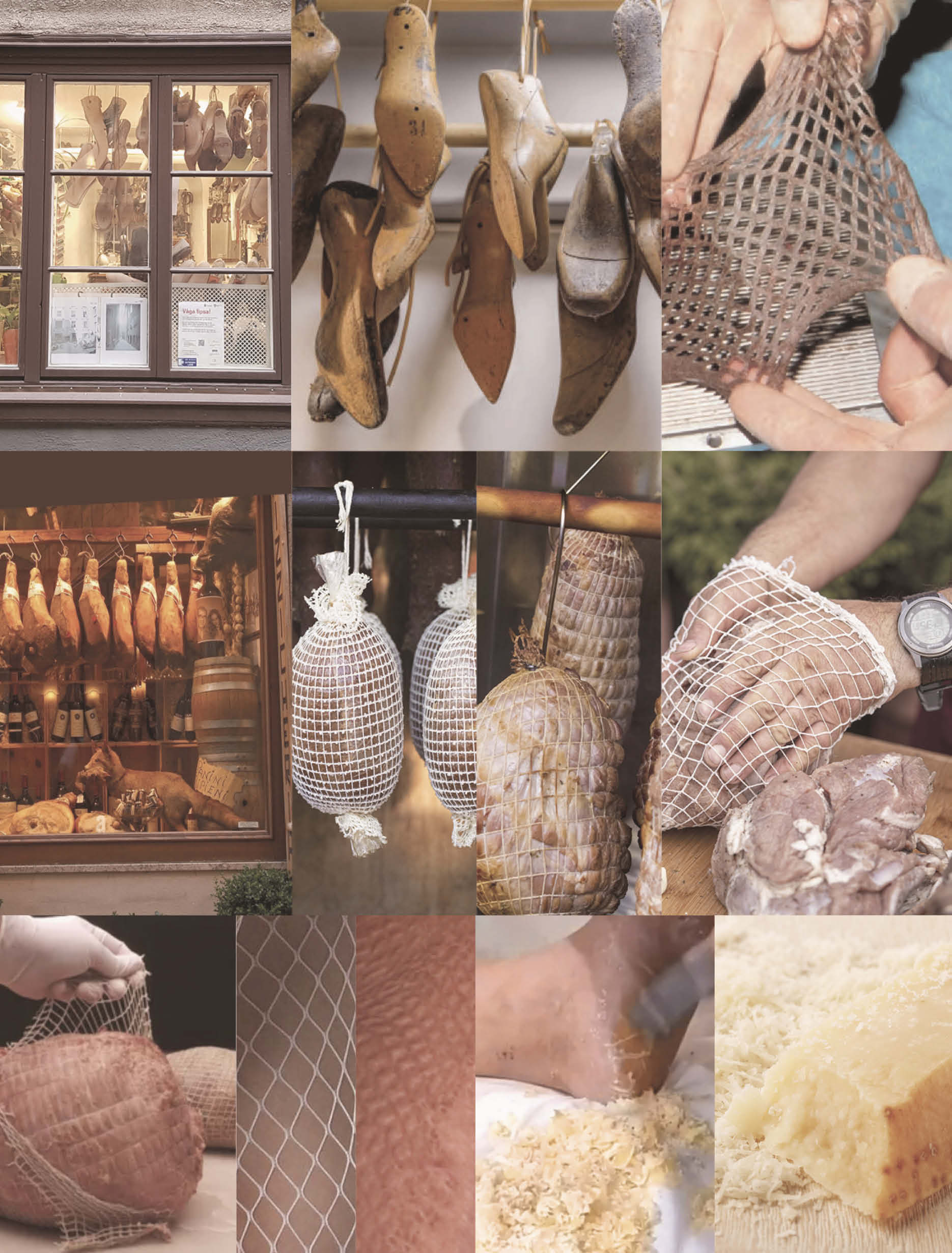
Research revealed aesthetic connections among materials that inspired the design: Similarities between shoe lasts/meat/skin, mesh/stockings and cheese/calluses.
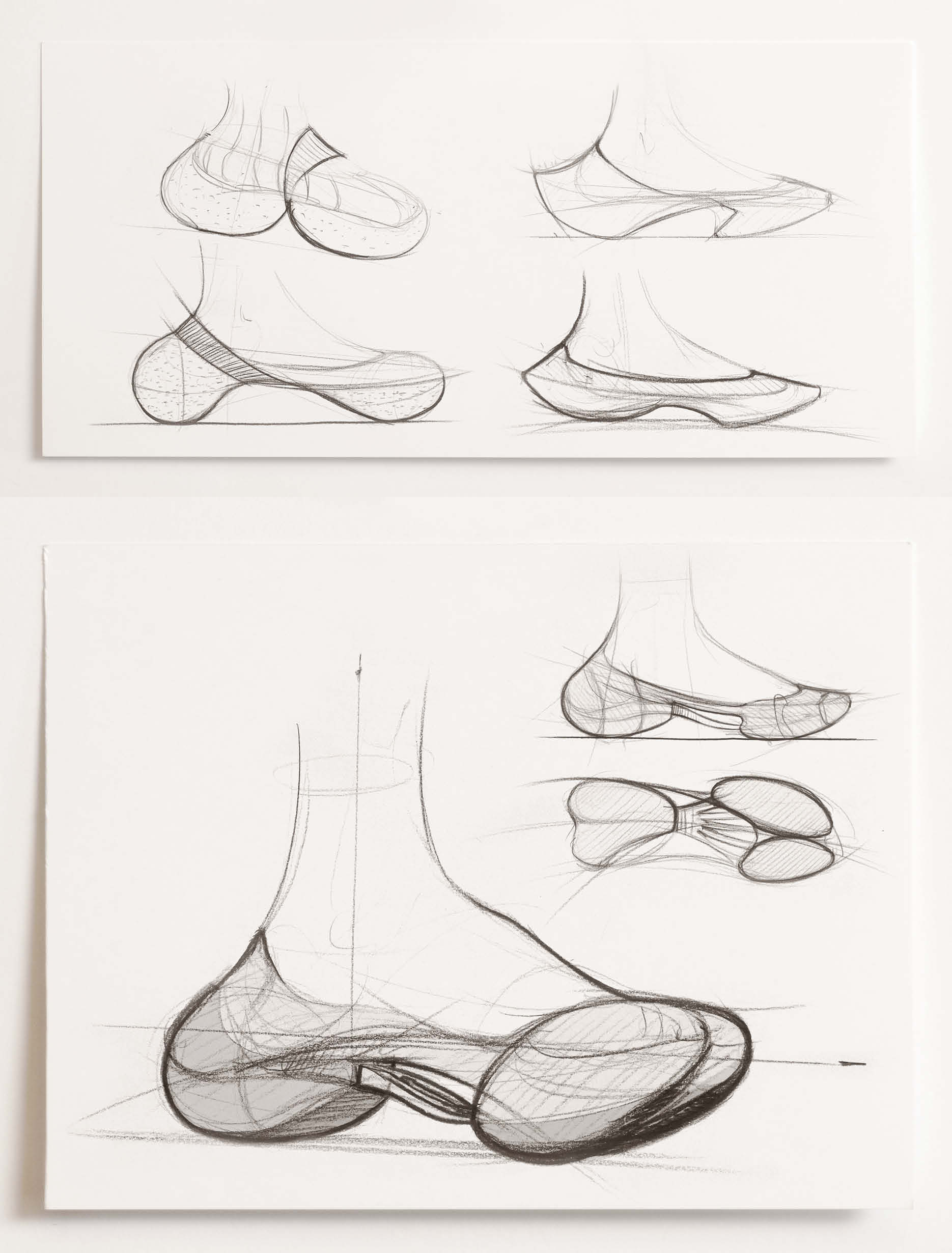
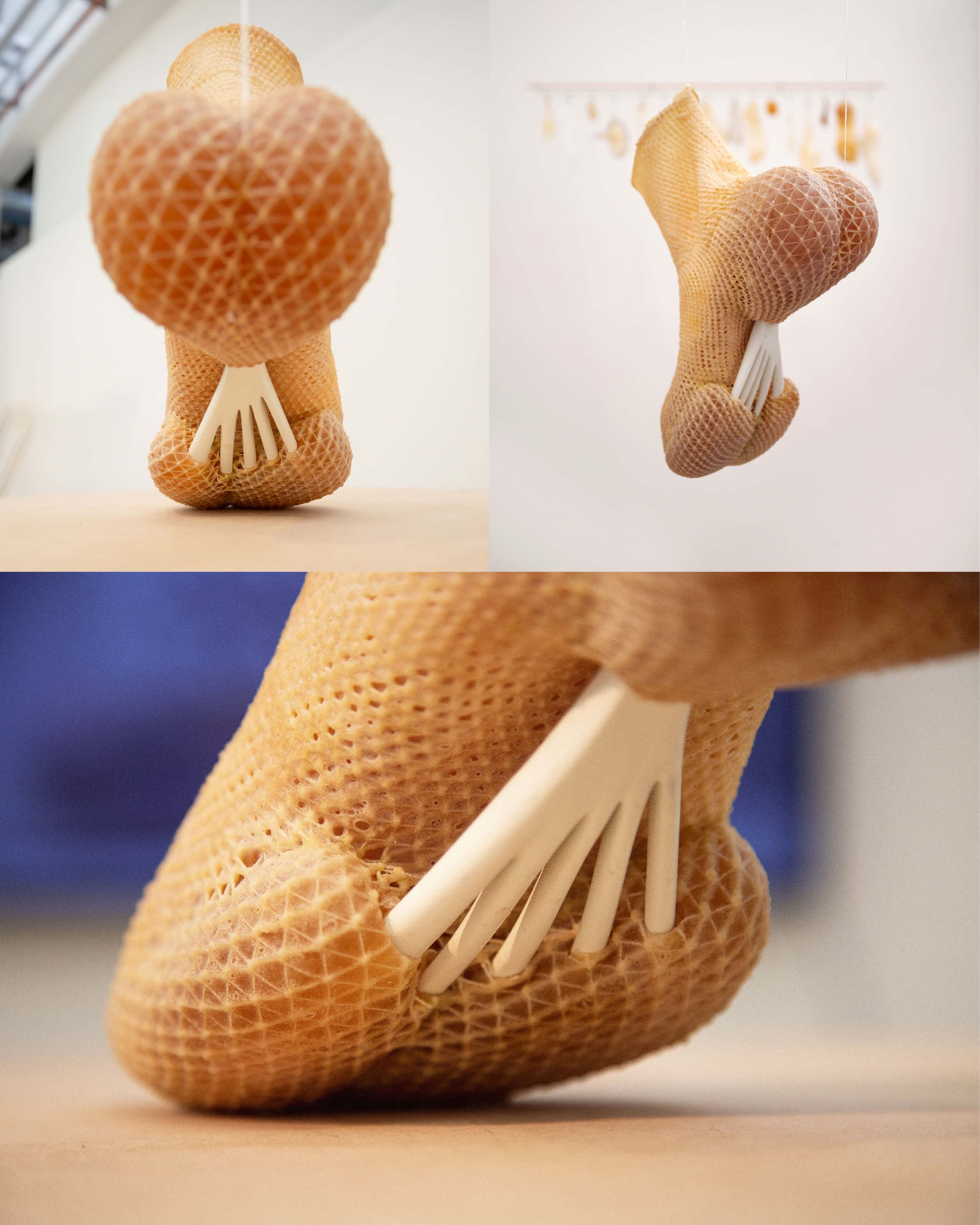
The concept enhances the natural anatomy with heel cushioning and two front paws. The additional bone structure improves stability and force return.
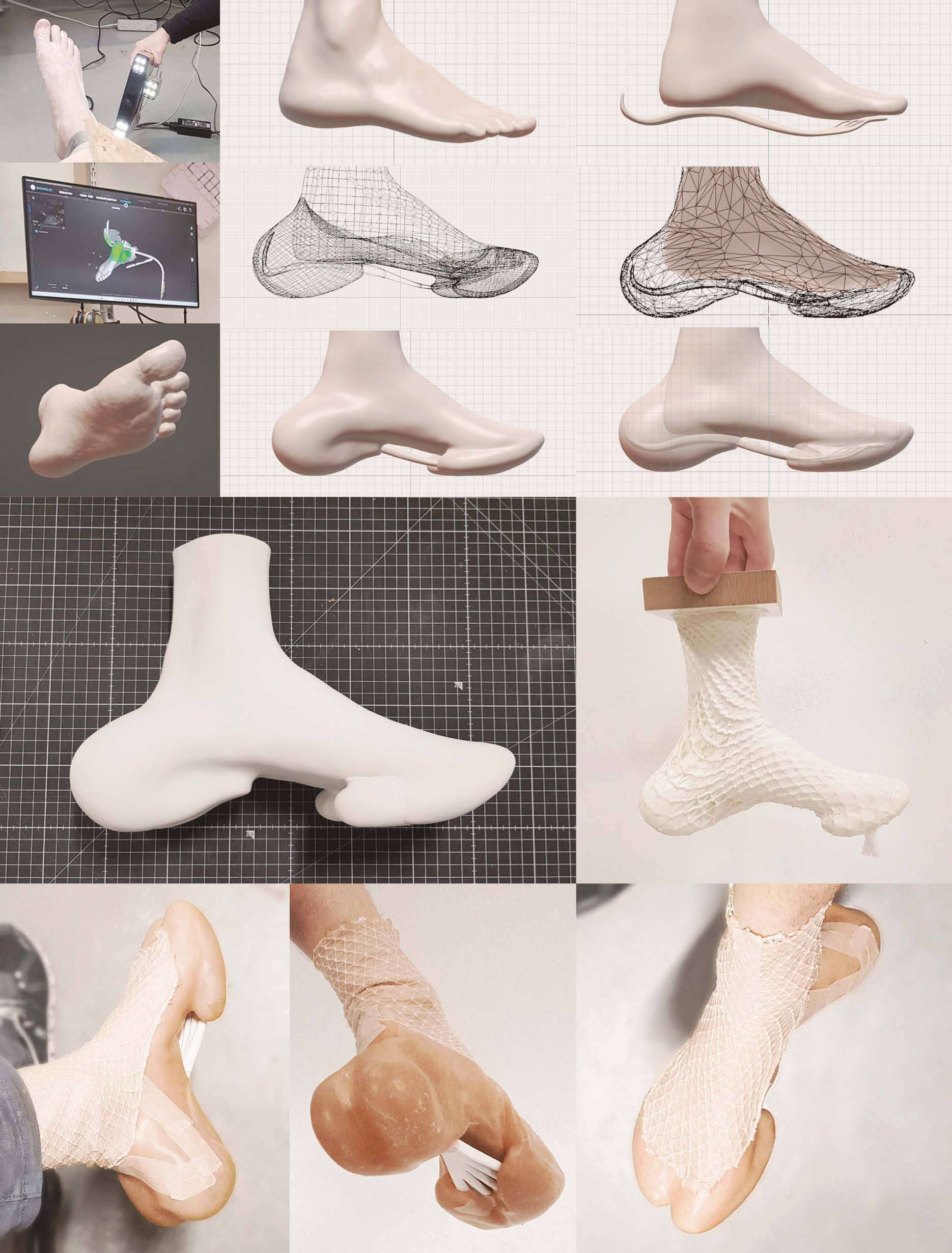
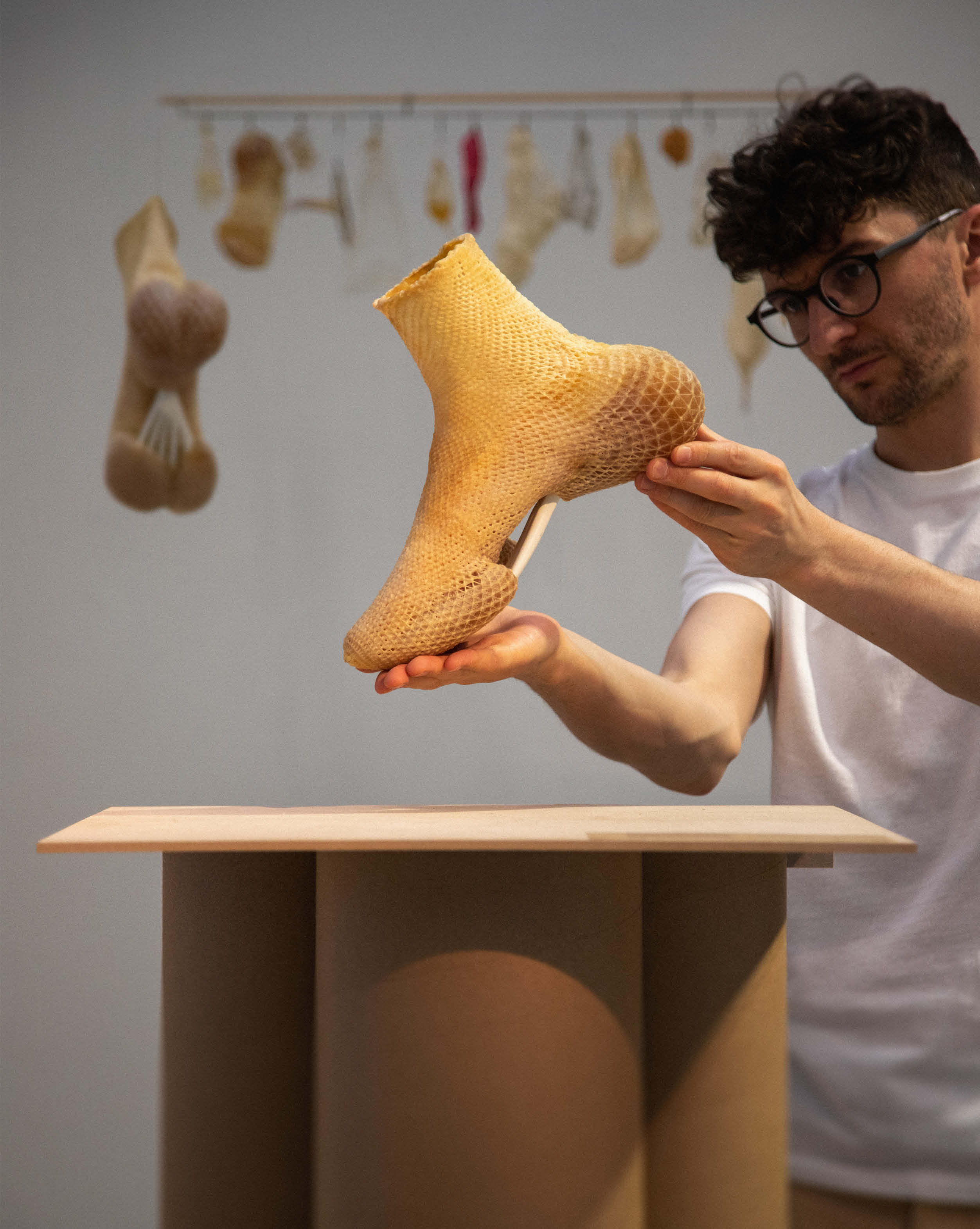
3D scanning, digital modeling, and 3D printing models with stretchable mesh and latex, filled with a custom gelatin blend.
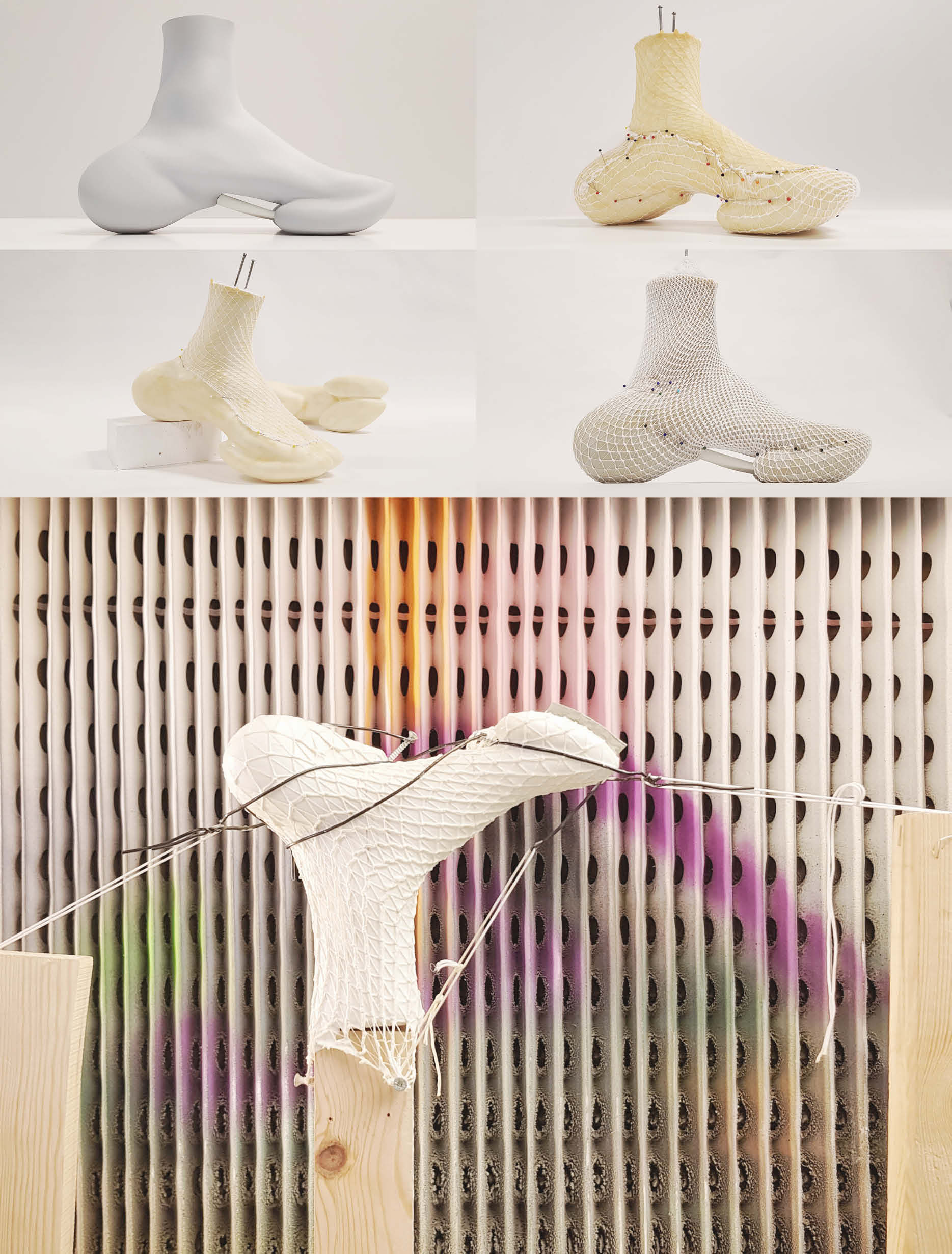
The last was adjusted to match the original feet, ensuring a precise fit. Smaller details, separation lines and mesh structures were refined.
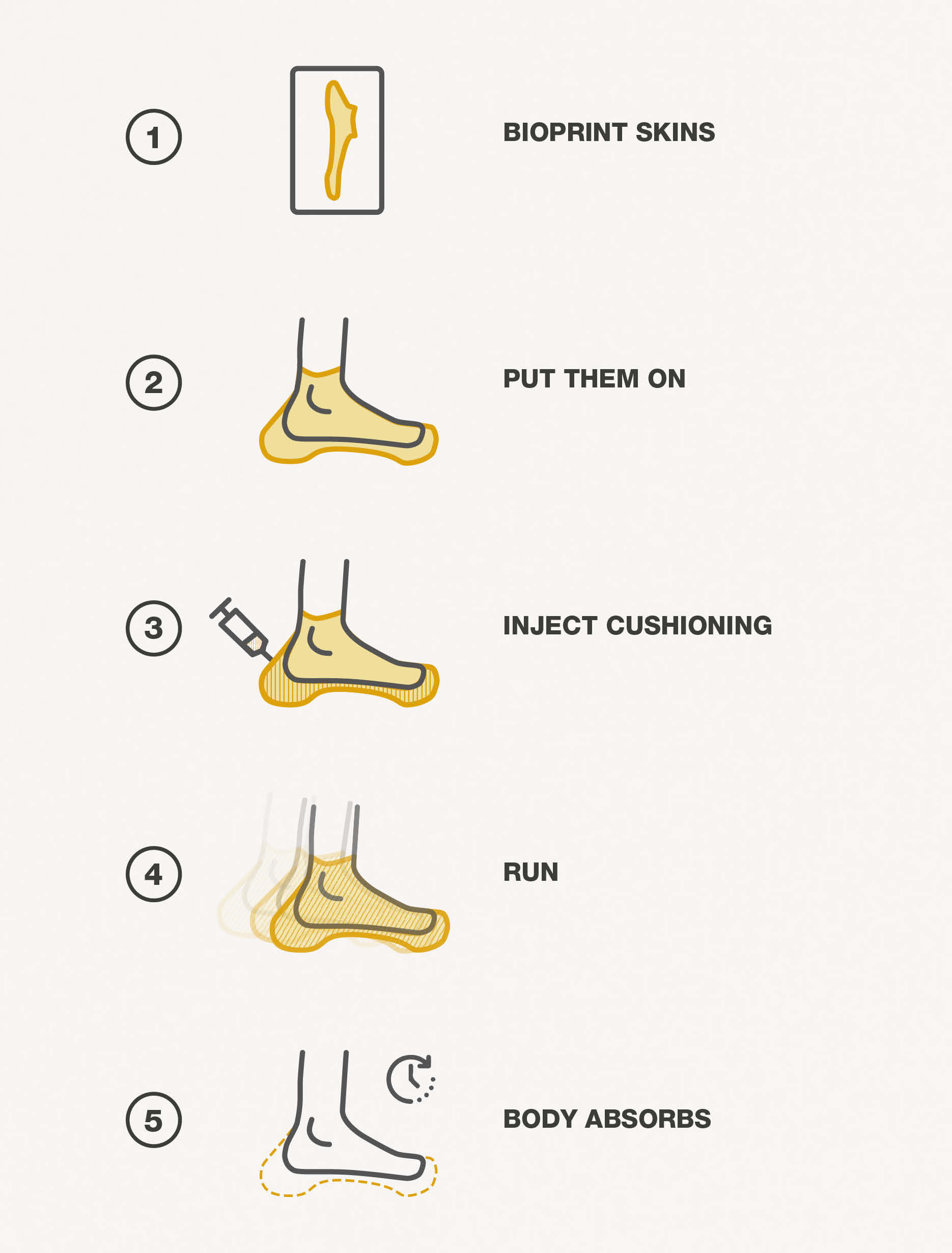
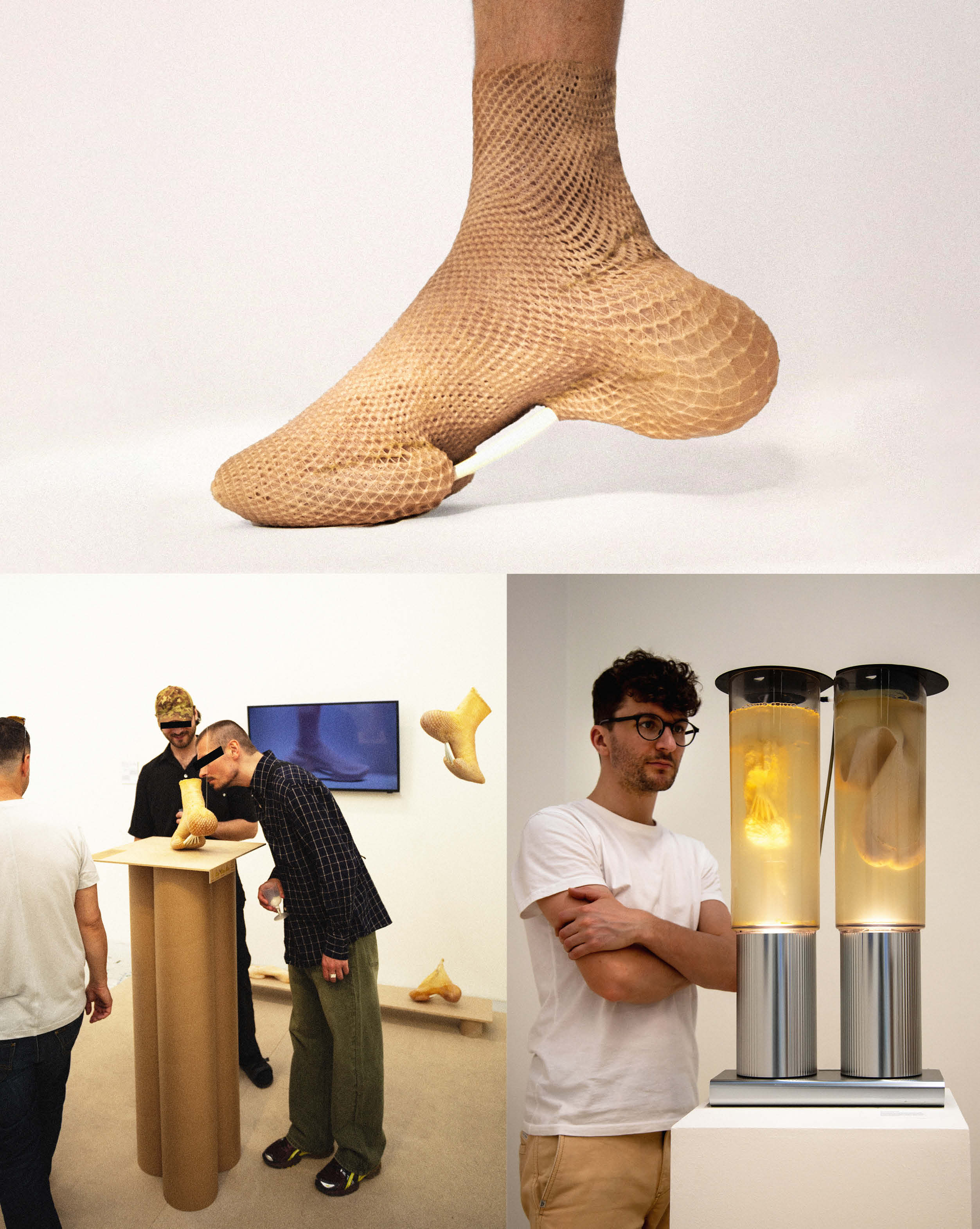
The process includes collecting biomaterial samples, bioprinting custom-fit skins, and injecting cushioning. Users wear the enhancements temporarily, allowing their bodies to physically connect with it.
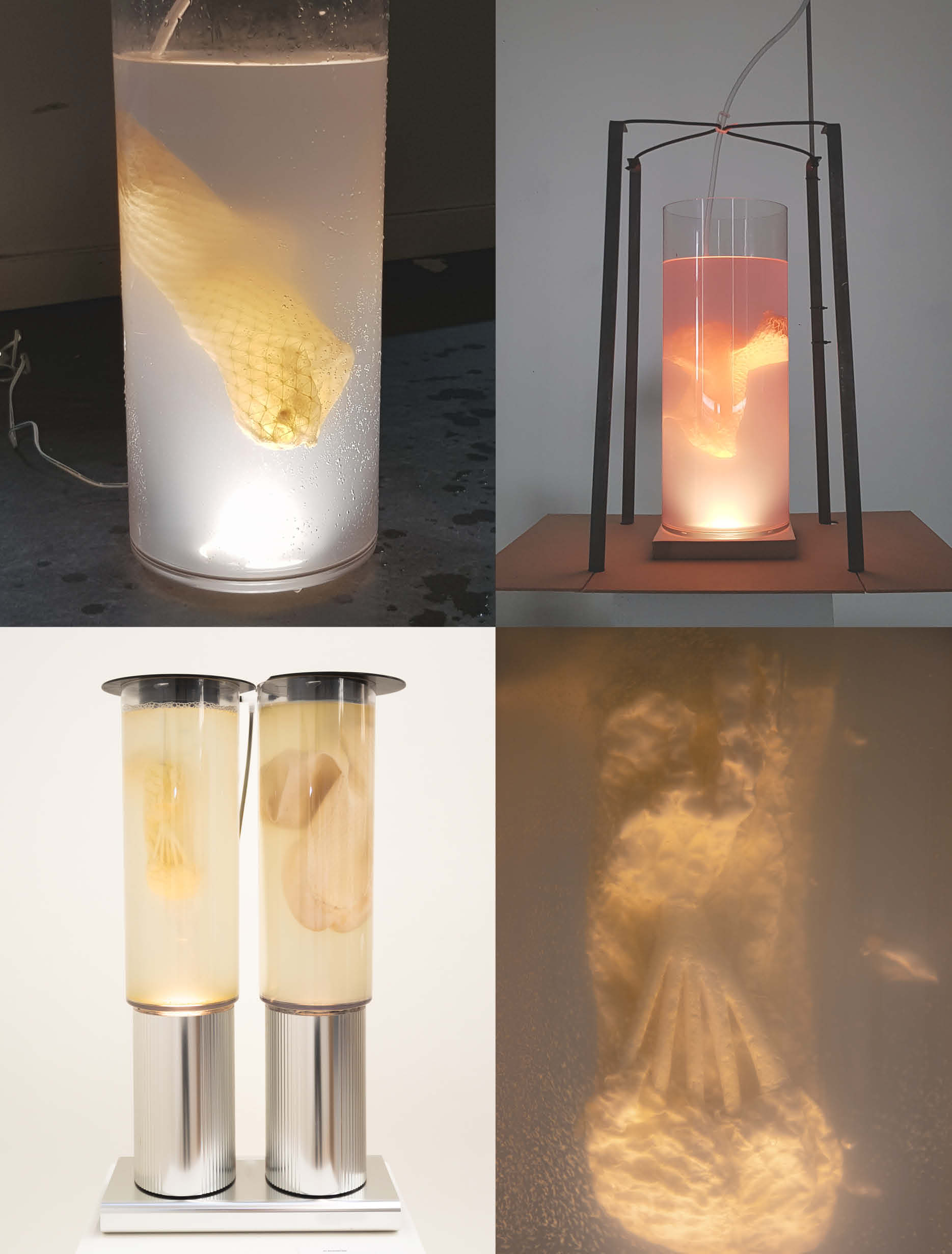
The bioreactor represents the future of personalized biological enhancements and serves as a storytelling element to immerse you in this future.
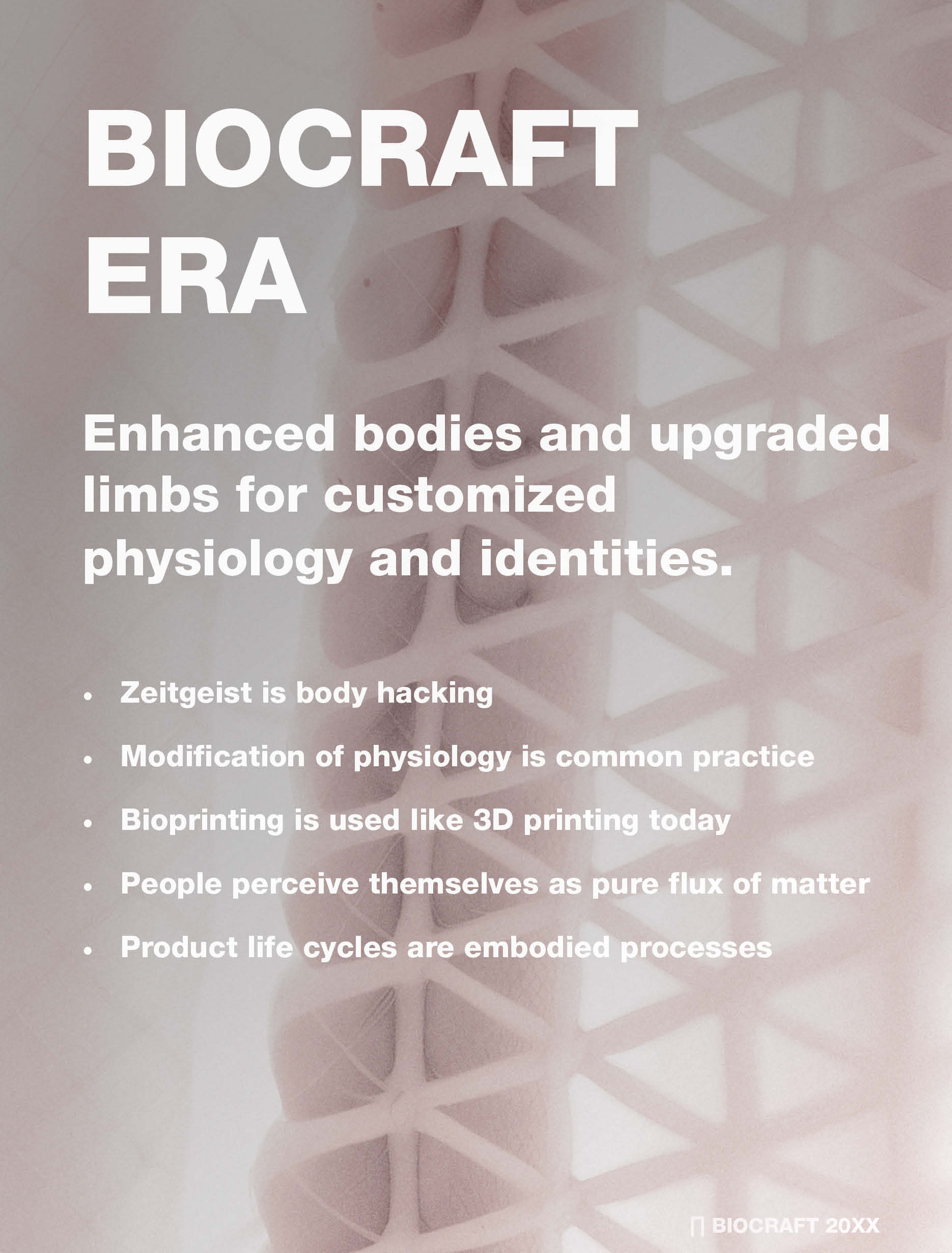
A future design scenario for 20XX envisions biotechnology integrated into everyday life. Personalized bioproducts and customized body enhancements empower individuals to take control of their bodies.
- Exhibited
- Hyper Human, National Museum of Science and Technology (Tekniska Museet), Stockholm. 2024, permanent exhibition.
Interdependence, Milano Design Week, 2025. - Press
- SVT: Footwear that grows with your skin
Sweden’s largest national television channel covered the Konstfack spring exhibition, featuring this project in the news programme.
D5 MAG: interview - Awards
- iF Design Award 2025, Winner in Responsible Consumption & Production (Footwear Innovation). Global Footwear Award 2024, Emerging Talent, Sustainability & Running. Core77 Design Award 2025, Notable. FIT Sport Design Award 2025.
- Scholarships
- Konstfack Foundation for meritorious students. Beata Brummer & Ulla Fröberg Cramér Foundation.